Are you looking for new ways to scale your Shopify store without increasing your advertising budget?
Pay-per-click (PPC) advertising is an effective tool for finding new customers, but as customer acquisition costs continue to rise, many brands are looking for more cost-effective ways to scale their stores.
In this article, we’re going to tell you about an interesting alternative: Shopify Collective.
Rather than spending all your time and money looking for new customers, Shopify Collective helps you to find other Shopify stores that will list and sell your products to their customers. All you then need to do is ship the product to the customer.
Sound good? In this article, we’ll explain what Shopify Collective is, how it works, and how to start using it to scale your Shopify store.
What is Shopify Collective?
Shopify Collective is a native B2B dropshipping network that allows Shopify stores to connect and sell each other’s products without upfront inventory costs.
You can sign up for Shopify Collective as a retailer, supplier, or both. As a supplier, you create product price lists and set competitive margins, allowing other Shopify merchants to earn money by selling your products in their store. Retailers list products in their store and handle all the customer service side of things. All the supplier has to do is fulfil and ship the order to the customer.
When a retailer sells one of your products, they receive the retailer margin, and you receive the remaining profits from the sale. It’s a smart, low-effort way for Shopify merchants to win incremental sales without spending a penny on ads.
The Shopify Collective platform is highly intelligent and simple to use. It updates inventory in real-time to prevent out-of-stock sales, automatically routes orders to the supplier for fulfilment, and manages payouts.
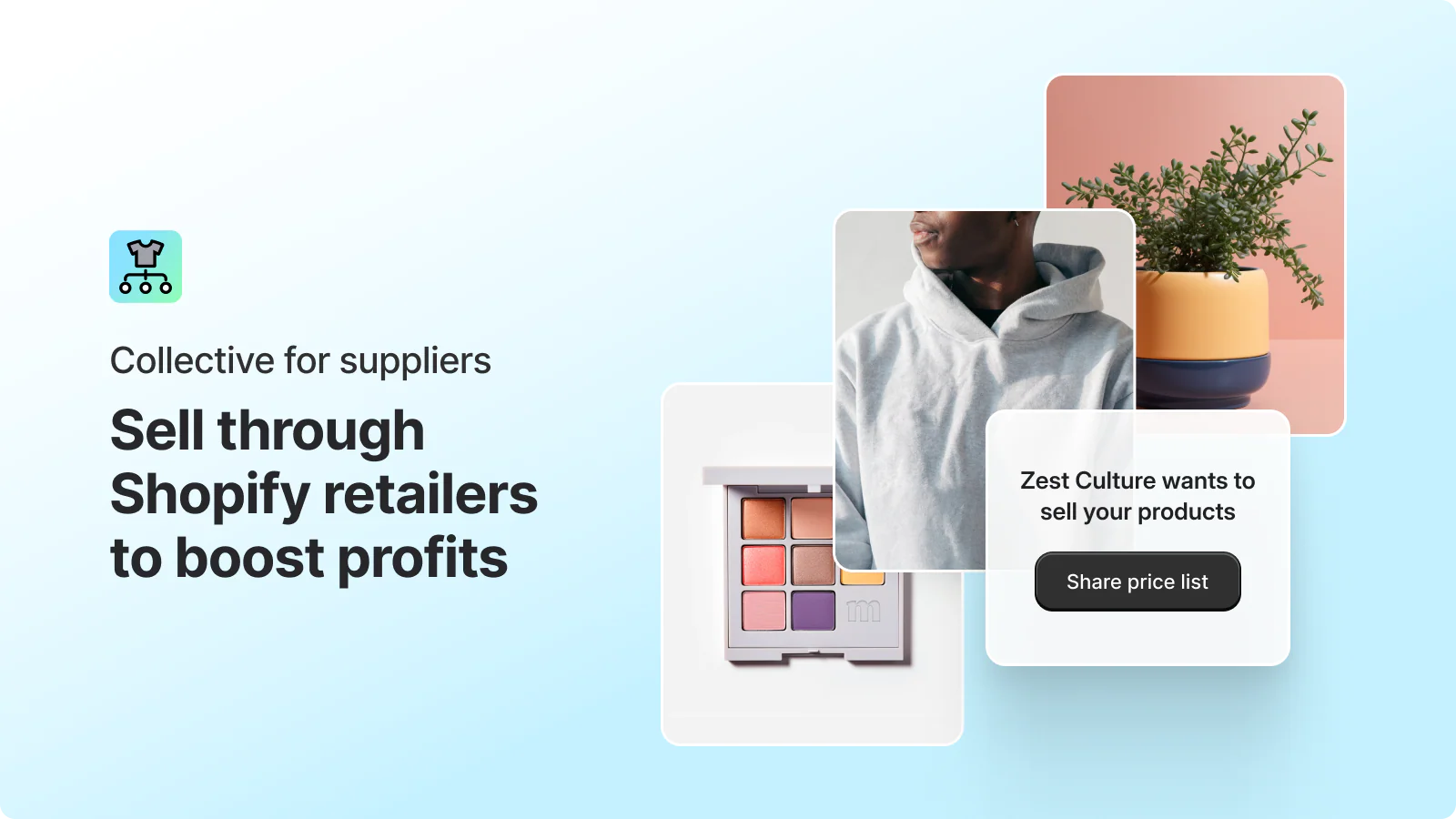
Image Credit: Screenshot from The Shopify Collective app page
Who is Shopify Collective available to?
Shopify Collective is free to use for all stores located in a supported country that meet the eligibility requirements and use a supported currency.
Stores must meet the following requirements to be eligible:
- An active paid Shopify plan.
- Shopify Payments enabled.
- Tax collection enabled (for stores based in the UK and EU).
- Network Intelligence enabled.
These requirements may be updated over time. You can view the full, up-to-date list of requirements in the Shopify Help Centre.
Why become a Shopify Collective supplier?
Shopify Collective helps merchants increase their reach by partnering with other Shopify stores, reducing their reliance on paid advertising.
Key benefits of becoming a Shopify Collective supplier include:
Greater profitability
Selling products through Shopify Collective is typically more profitable than paying for ads to acquire the customer yourself. Generally, the margin you give the retailer is significantly lower than what you would spend to acquire a customer using PPC ads.
Simplified distribution
Shopify Collective provides suppliers with a simple, hassle-free way to connect with retailers and expand their distribution network. It eliminates the need for complex negotiations, inventory commitments, or manual order processing. Every part of the process is handled efficiently within the Shopify platform.
Access new audiences
Building an audience from scratch can be time-consuming and expensive. Shopify Collective enables suppliers to easily leverage other retailers’ established customer bases.
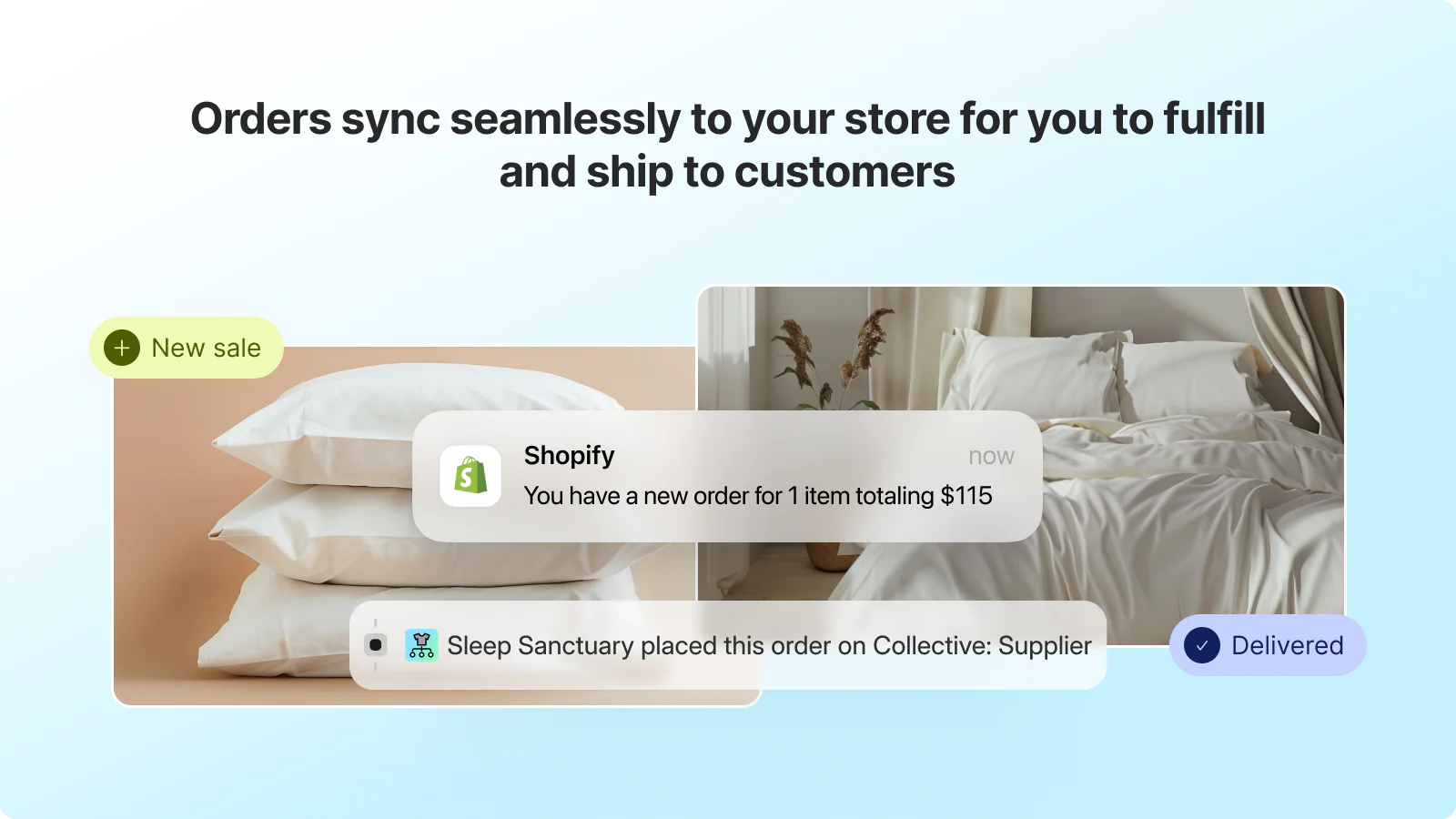
Image Credit: Screenshot from The Shopify Collective app page
Lower risk
Shopify Collective offers both suppliers and retailers a low-risk way to grow their businesses. Retailers can add new products to their stores without paying for inventory upfront, and suppliers only pay retailers a margin once a sale has been made.
Greater brand awareness
If you can get more stores to stock your products, more people will see them. Even if a customer doesn’t purchase your product straight away, exposure helps build familiarity and strengthen brand awareness to drive future sales.
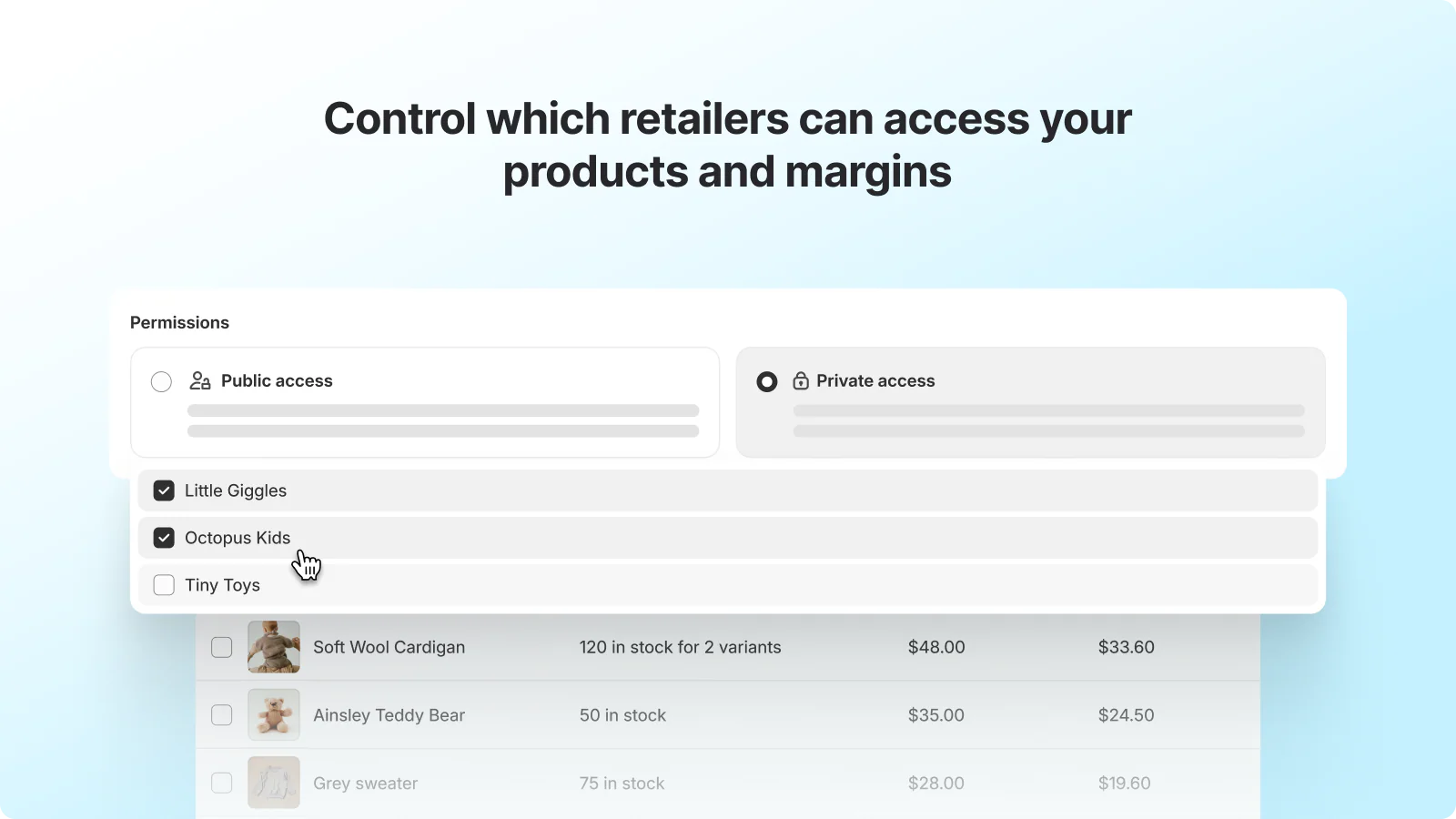
Image Credit: Screenshot from The Shopify Collective app page
How to get set up as a Shopify Collective supplier? (a step-by-step guide)
If you want to reduce your reliance on advertising and expand your distribution network, Shopify Collective could help you to scale your store for less. With no upfront costs and minimal risk, there’s very little to lose, so let’s find out how to get started.
Step 1: Install Shopify Collective
Visit the Shopify App Store to install the Shopify Collective (supplier) app.
If you don’t yet meet all the platform’s requirements, a banner will appear in your sales channel to tell you which requirements still need to be fulfilled to become eligible.
Step 2: Create a price list
When creating your first price list, don’t make the mistake of just uploading your entire product catalogue. Instead, cherry-pick your bestselling products, the ones that you’re confident will perform well. Starting with your best products will make it easier to attract retailers and maximise your chances of success.
Step 3: Set your margins
Now it’s time to decide how much margin retailers should earn from selling your products. There’s no right or wrong answer here – the right margin really depends on factors like your industry, product type, and product margins. However, it’s important to think carefully before setting the margin – you need to strike a balance between attracting retailers with an irresistible offer and earning a decent profit yourself.
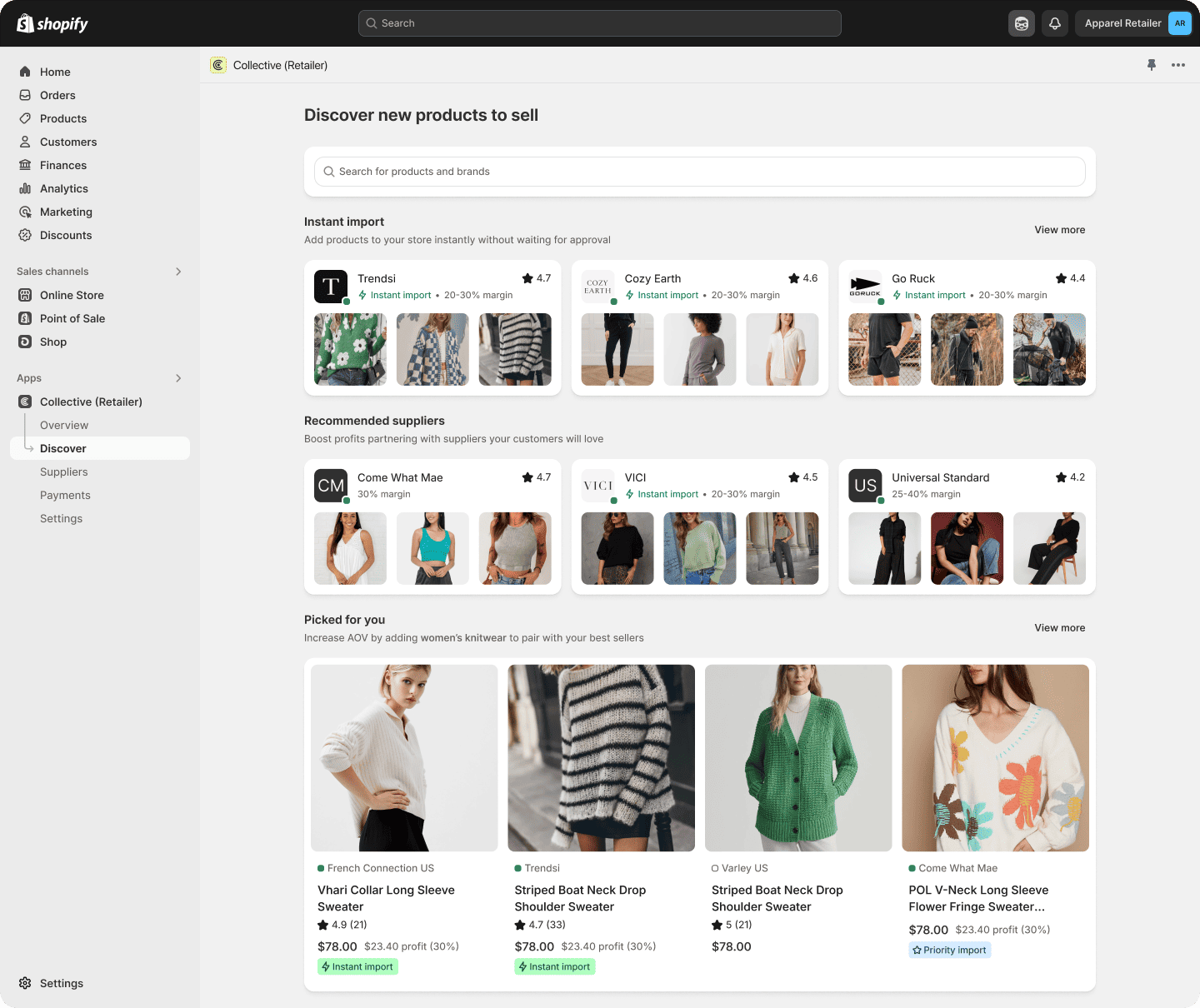
Image Credit: Screenshot from Shopify Collective: Getting started as a retailer
Step 4: Fill out your profile
Your supplier profile should provide retailers with key information about your brand and products. Use this section to tell retailers what makes your brand and products unique, who they’re aimed at, and why customers love them. Clearly communicating your value proposition makes it easier for retailers to decide whether your products are a good fit for their audience. You should also provide practical information about shipping and fulfilment times, including which countries you ship to. Offering sample products or a discounted rate for new retailers can help to build trust and persuade them to partner with you.
Step 5: Connect with retailers
Once you’re happy with your profile and price lists, it’s time to start building your distribution network. You can wait for retailers to discover your products through the platform, which could take a while, or you can proactively contact retailers who you think could be a good fit for your products.
Strategies for scaling your Shopify store using Shopify Collective
To get the most from Shopify Collective and start seeing results faster, you need to take a proactive approach to finding retail partners.
Here are some smart strategies to help you grow your distribution network, build long-lasting partnerships, and generate more sales using Shopify Collective.
Use AI to find relevant retailers
Shopify’s AI assistant Sidekick can help you to quickly find relevant retailers to reach out to. Use Sidekick to analyse your brand and then scan the network for retailers that sell complementary products. For example, if you sell coffee, Sidekick could help you find brands that sell ceramic mugs but not coffee. It can then generate a list of recommended partners for you. From this, you can send out personalised invites to retailers inviting them to connect and learn more about your products.
Build reciprocal partnerships
One of the simplest and most effective ways to scale your store using Shopify Collective is to create reciprocal partnerships. Look for stores of a similar size selling products that complement yours and then offer to sell their products if they sell yours in return. This two-pronged approach allows both brands to increase their product catalogues and customer lists without spending a penny.
Partner with creators and influencers
Shopify Collective allows creators and influencers without any inventory of their own to open a Shopify store selling the products they recommend to their audience. Rather than paying an influencer for a one-off sponsored post, Shopify Collective enables suppliers to build ongoing partnerships with content creators.
Top tips for succeeding as a Shopify Collective supplier
To build long-term partnerships with retailers and successfully scale your distribution network using Shopify Collective, you need to provide both retailers and customers with a seamless experience.
Here are our top tips for succeeding as a Shopify Collective supplier.
Keep shipping simple
Complicated shipping rules can be off-putting for retailers, especially if they offer free shipping and you don’t. If you can offer free shipping, this will help to simplify the experience for everyone – otherwise, just keep shipping rates as straightforward and transparent as possible.
Don’t include marketing materials
Remember, when a customer buys one of your products through a different retailer, you are “ghost shipping” the product. The customer is buying from the retailer, not from you. For this reason, it’s best to avoid adding your own marketing flyers or invoices inside the package, unless you’ve agreed to do so with the retailer. This helps to create a more consistent shopping experience for the customer.
Operate a straightforward returns policy
Make sure you explain your returns policy clearly within your supplier profile. Typically, the customer communicates with the retailer about returning an item, and you manage the returned product, so it’s important to set clear expectations with the retailer from the start.
Prioritise fast fulfilment
The faster you can process and dispatch orders, the better the experience for both retailer and customer. Customers are generally more satisfied with the service when they receive their orders promptly, and retailers experience fewer customer queries and complaints when orders always arrive on time.
Shopify Collective FAQs
Who pays for shipping?
The retailer charges the customer for shipping, and the supplier charges the retailer for shipping. The simplest way to handle shipping is to incorporate the cost into the product price and then offer “free shipping”.
Can I stop a retailer from undercutting my price?
Suppliers can set recommended retail prices, but retailers ultimately control the prices displayed in their own stores. For this reason, it’s important to discuss pricing expectations with retailers before you begin working together. If a retailer does undercut your price, it will reduce their profit margin.
Is using Shopify Collective bad for SEO?
No, using Shopify Collective is not bad for SEO. However, it’s a good idea to encourage retailers to customise product descriptions to prevent duplicate content and give each store the best chance of ranking in search results.
Partner with Create8 to scale your Shopify store
Are you ready to unlock new ways to grow your store, without spending more money on advertising?
As a Shopify partner, Create8 helps eCommerce brands design smarter growth strategies to help scale their stores. From Shopify Collective and Shopify Plus to marketplace integrations and conversion rate optimisation techniques, our team of Shopify experts can help you increase sales, reach new audiences, and maximise your store’s performance.
Contact us today to discover how we can help your Shopify store to grow and reach its full potential.